

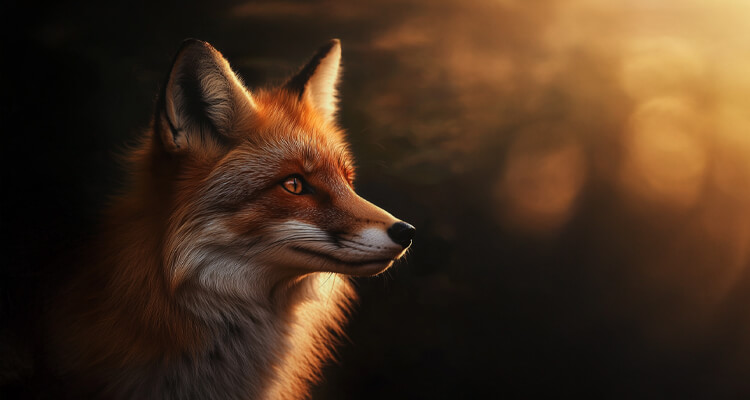
Foxes have long occupied a special place in folklore. Depending on the story, they are clever tricksters, supernatural messengers, or quiet observers slipping between the wild and the familiar. Watching a fox move through the landscape makes it easy to understand why. They seem to appear and disappear without effort, crossing fields, forests, and even city streets with remarkable confidence.
That graceful movement isn’t magic. It’s the result of millions of years of evolution that have produced one of nature’s most adaptable predators. Every step, leap, and pause is part of a carefully refined strategy that helps foxes hunt, avoid danger, and thrive in a wide variety of environments.
Built to Move Without Being Heard
One of a fox’s greatest strengths is how quietly it moves.
Foxes are digitigrade animals, meaning they walk on their toes rather than the entire foot. This gives them a lighter, more controlled stride while reducing the amount of noise each step creates. Thick paw pads soften their footsteps even further, allowing them to move across leaves, grass, snow, and loose soil with very little sound.
Stealth is about more than silent feet, though.
Foxes constantly monitor their surroundings, listening for prey and watching for potential threats. As they stalk an animal, they often slow down, pause, and time their movements to match background sounds like rustling leaves or gusts of wind. By blending their movements into the natural rhythm of the environment, they become much harder to detect.
They also make excellent use of cover. A fox will crouch low behind vegetation, follow the edge of tall grasses, or move through shadows to remain hidden until the perfect moment arrives.
Hunting With an Invisible Compass
One of the most fascinating discoveries about foxes involves a sense that scientists are still working to fully understand.
Research suggests that red foxes may use Earth’s magnetic field to improve the accuracy of their hunting, particularly when prey is hidden beneath snow or dense vegetation. Many successful hunting leaps are aligned toward magnetic north, hinting that foxes may use magnetoreception as an additional source of information.
Magnetoreception is already known in birds, sea turtles, and several other animals. In foxes, researchers believe it may function like an internal reference point, helping them judge distance and direction before making a precise leap.
The exact mechanism remains under investigation, but the behaviour itself is remarkable. It gives foxes another advantage when hunting prey they cannot actually see.
Fast, Flexible, and Surprisingly Agile
Foxes are built for quick bursts of speed rather than long-distance pursuits.
Most can reach speeds of around 30 to 40 miles per hour over short distances, but speed is only part of the story. Their lean bodies allow them to change direction rapidly, squeeze through narrow openings, and leap over obstacles with impressive control.
Their large, bushy tail, often called a brush, acts as a counterbalance during sharp turns, helping them stay stable while running or jumping.
Young foxes spend countless hours playing, wrestling, chasing one another, and practicing dramatic leaps. While it may look like simple fun, these games help develop the balance, coordination, and hunting skills they will rely on throughout adulthood.
Escaping Danger With Intelligence
Foxes are skilled hunters, but they are also prey for larger predators such as wolves, coyotes, and birds of prey.
Their first line of defense is often avoiding conflict altogether.
When pursued, foxes frequently double back across their own tracks, creating confusing scent trails that make life more difficult for predators relying on smell. They also know how to use the landscape to their advantage, weaving through dense vegetation, slipping beneath fences, or changing direction suddenly to break a chase.
In open areas, they often run in unpredictable zigzag patterns that make them much harder to catch.
Observers have even described foxes briefly pausing during a pursuit before darting away again. While it’s tempting to interpret this as teasing or playfulness, scientists remain cautious about assigning human motivations to the behaviour. Whatever the reason, it demonstrates the fox’s remarkable awareness of both its surroundings and its pursuer.
Masters of Adaptation
Few wild predators have adapted to changing environments as successfully as foxes.
They are just as comfortable moving through forests and grasslands as they are exploring farmland, suburban neighbourhoods, and busy cities. Urban foxes have learned to navigate fences, gardens, rooftops, and narrow alleyways with the same confidence their rural relatives display in the wilderness.
This flexibility has allowed foxes to expand into habitats where many other predators struggle to survive.
Rather than relying on brute strength, foxes succeed because they are observant, adaptable, and willing to change their behaviour when conditions change.
Why Foxes Continue to Capture Our Imagination
Foxes remind us that survival isn’t always about being the strongest animal in the landscape. Sometimes success belongs to those that move quietly, pay attention, and know when to remain unseen.
Their graceful movements, remarkable hunting techniques, and ability to thrive almost anywhere have earned them a lasting place in mythology and folklore around the world. Yet the real animal is every bit as fascinating as the stories that surround it.
Whether glimpsed crossing a snowy field at dawn or disappearing into the shadows at the edge of a forest, a fox leaves behind the same impression. For a brief moment, it feels less like you’ve watched an animal pass by and more like you’ve witnessed the landscape itself come to life.
Enjoying Love of Gothic?
Love of Gothic is built by volunteers who simply love sharing gothic culture in all its forms. If you’d like to help us keep creating articles, directories, recipes, and resources for the community, becoming a Patreon member is one of the best ways to support our work.
Not in a position to contribute financially? You can still make a huge difference. Share Love of Gothic with friends, recommend the site in your favourite communities, leave reviews where you can, favourite the listings you enjoy, and help us grow a community that celebrates gothic culture in all its forms.
However you choose to support us, thank you for being part of the community.