

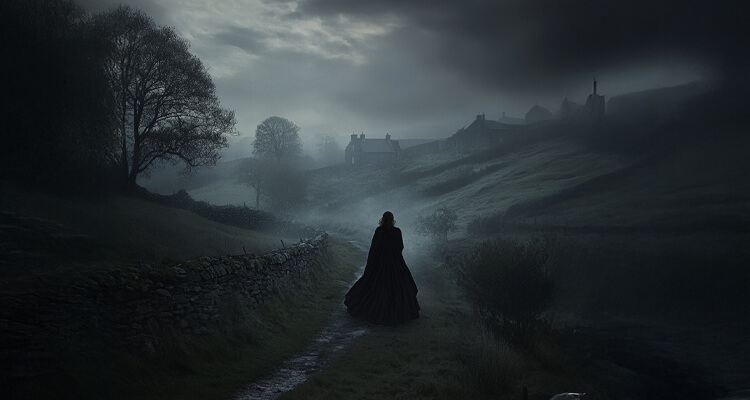
The Pendle Witch Trials of 1612 remain one of the best-known witch trials in British history. Set against the lonely landscape of Lancashire’s Pendle Hill, the events combined poverty, religious conflict, local rivalries, and widespread belief in witchcraft to create a tragedy that still captures the imagination more than four centuries later.
Today, the Pendle witches occupy an unusual place in history. Once condemned as servants of the Devil, they are now often remembered as victims of fear, suspicion, and a justice system that offered little protection to those living on society’s margins.
Lancashire in an Age of Fear
To understand the Pendle Witch Trials, it’s important to understand the world in which they happened.
Early seventeenth-century Lancashire was a remote and often impoverished region. Many communities struggled with poor harvests, limited opportunities, and deep religious divisions following England’s break from the Catholic Church.
Belief in witchcraft was widespread.
Illness, failed crops, dying livestock, and unexpected tragedies were frequently explained through supernatural causes. At the same time, King James I had taken a personal interest in witchcraft, publishing Daemonologie in 1597 and encouraging the prosecution of suspected witches throughout his kingdom.
Against this backdrop, accusations of witchcraft could quickly become matters of life and death.
The Families at the Centre of the Accusations
The Pendle trials revolved around two local families.
Elizabeth Southerns, better known as Demdike, and Anne Whittle, known as Chattox, were elderly women who lived in poverty and were known locally for folk healing and herbal knowledge. Like many so-called “cunning folk” of the period, they occupied an uncertain position within their community. Their skills were sought after by neighbours, but they were also viewed with suspicion.
The two families had a long-standing rivalry.
Tensions escalated in March 1612 after Demdike’s granddaughter, Alizon Device, encountered travelling peddler John Law. Shortly afterward, Law became ill, and Alizon reportedly confessed that she had cursed him.
That confession sparked a chain reaction.
Old disputes resurfaced, neighbours accused one another of witchcraft, and members of both families soon found themselves arrested.
The Trial at Lancaster
Twelve people were ultimately accused of witchcraft in connection with the Pendle case, making it one of the largest witch trials in English history.
The trial took place at Lancaster Assizes in August 1612.
One of the most influential witnesses was nine-year-old Jennet Device, whose testimony against members of her own family helped secure multiple convictions. At the time, it was highly unusual for such a young child to provide evidence in a criminal trial, making her role one of the most controversial aspects of the case.
Of those brought to trial, ten were convicted and sentenced to death by hanging. Only Alice Grey was acquitted.
The proceedings were later documented by court clerk Thomas Potts in The Wonderfull Discoverie of Witches in the Countie of Lancaster. His account remains one of the primary historical sources for the trials, although modern historians recognize that it reflects the perspective of the authorities rather than that of the accused.
Poverty, Power, and Scapegoats
Although the trials centred on accusations of witchcraft, the underlying causes were far more complex.
Many of the accused were poor women living on the edges of society. Some relied on begging, herbal remedies, or small favours from neighbours to survive. In difficult economic times, disputes over food, money, livestock, or local rivalries could easily evolve into accusations of supernatural wrongdoing.
Witchcraft often became a way of explaining hardship.
When livestock died, children became ill, or crops failed, blaming an unpopular neighbour offered a simple explanation for problems that had no easy answers.
Seen through a modern lens, the Pendle Witch Trials reveal as much about poverty, prejudice, and social tension as they do about belief in magic.
Pendle’s Lasting Legacy
The Pendle Witch Trials never truly disappeared from public memory.
Today, Pendle Hill has become one of Britain’s best-known locations associated with witchcraft. Visitors follow the Pendle Witches Trail, explore local museums, and learn about the people whose lives became entangled in one of England’s most infamous trials.
The story has inspired novels, films, television programmes, plays, and countless works of gothic fiction.
With every retelling, the accused have gradually shifted from villains to tragic historical figures, reflecting changing attitudes toward justice and persecution.
Why the Pendle Witches Still Matter
The Pendle Witch Trials continue to resonate because they ask timeless questions.
What happens when fear outweighs evidence? How easily can communities turn against their neighbours during periods of uncertainty? Who becomes the easiest target when society looks for someone to blame?
These questions feel surprisingly modern.
The Pendle witches remind us that history’s greatest tragedies are often driven not by monsters or magic, but by ordinary people acting out of fear, suspicion, and certainty that they are right.
For lovers of gothic history, Pendle Hill remains a place where folklore and documented history meet. The landscape still carries the weight of the stories told there, but perhaps the most haunting lesson is that the real horror was never witchcraft itself. It was how quickly fear became accepted as proof.
Still exploring the darker side of history?
The Pendle Witch Trials are just one chapter in a long history of folklore, superstition, forgotten places, and extraordinary people. If this story caught your attention, you’ll find plenty more waiting throughout Love of Gothic.
If you’d like to help us continue researching and sharing these stories, consider supporting the site on Patreon. You can also make a big difference by sharing articles you enjoy, recommending Love of Gothic to fellow history lovers, leaving reviews where you can, and favouriting the listings that deserve more attention.
Every story shared helps keep history alive. Thanks for being part of the journey.