

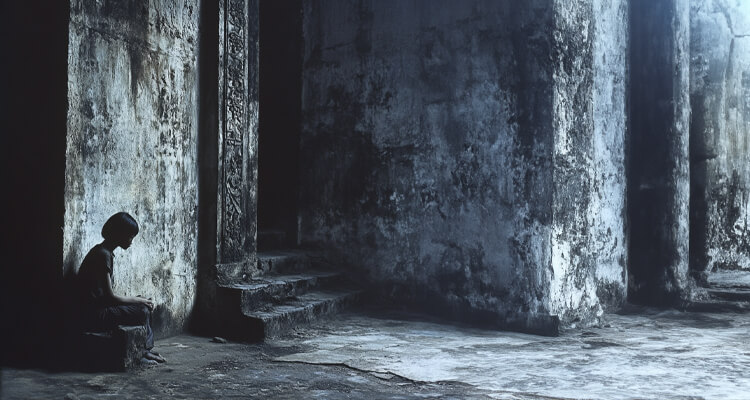
In less than four years, Cambodia lost nearly a quarter of its population.
Between 1975 and 1979, the Khmer Rouge attempted to remake the country into a classless agrarian society through forced labour, mass executions, starvation, and political persecution. What emerged instead was one of the twentieth century’s most devastating genocides, leaving behind deep physical, cultural, and psychological scars that remain visible today.
The Khmer Rouge’s reign demonstrates how quickly extremist ideology can destroy a nation. Its legacy is measured not only in the lives lost, but also in the generations that have spent decades rebuilding what was deliberately erased.
The Pursuit of a Radical Vision
When the Khmer Rouge seized control of Cambodia in April 1975, its leaders promised a revolutionary new beginning.
Led by Pol Pot, the regime sought to eliminate social classes, private property, religion, education, and modern urban life. Cities were emptied almost overnight as millions of people were forced into the countryside to work on collective farms.
The goal was to create a self-sufficient agricultural society.
Anyone considered connected to the former government, education, religion, or foreign influence became a potential target. Teachers, doctors, monks, civil servants, and professionals were often viewed as enemies of the revolution.
The consequences were catastrophic.
A Campaign of Mass Killing
The Khmer Rouge quickly turned ideological purification into systematic violence.
Across the country, people were imprisoned, tortured, executed, or worked to death under brutal conditions. Starvation, disease, and exhaustion claimed countless additional lives as food was tightly controlled and medical care all but disappeared.
One of the regime’s most infamous prisons was S-21, now known as the Tuol Sleng Genocide Museum in Phnom Penh. Thousands of prisoners passed through its gates. Only a handful survived.
By the time the regime fell in 1979, an estimated 1.5 to 2 million people had died through execution, forced labour, starvation, or illness.
The Destruction of Cambodian Society
The Khmer Rouge did not simply target individuals.
It attempted to dismantle Cambodian society itself.
Schools were closed. Hospitals ceased functioning. Families were separated, often permanently. Children were encouraged to report on their parents, while communities lived under constant surveillance and fear.
Even ordinary possessions could become dangerous.
Speaking a foreign language, wearing glasses, or displaying signs of education could lead to suspicion and, in some cases, execution.
The loss of so many teachers, doctors, engineers, and other professionals left Cambodia facing enormous challenges long after the regime collapsed.
An Assault on Culture and Religion
Cambodia’s cultural identity also came under attack.
Buddhism, which had shaped Cambodian society for centuries, was heavily suppressed. Monks were forced to abandon religious life, temples were damaged or repurposed, and religious ceremonies were prohibited.
The Khmer Rouge viewed traditional culture as an obstacle to its revolutionary goals.
Libraries, artworks, historical records, and cultural institutions were destroyed or abandoned. This effort to erase Cambodia’s past became another form of violence, one aimed at eliminating not only people but also the country’s shared identity.
The effects of that cultural destruction are still being addressed today.
The Lasting Human Cost
Although the Khmer Rouge ruled for less than four years, its impact continues to shape Cambodia.
Many survivors experienced profound trauma after witnessing executions, losing family members, or enduring years of forced labour and starvation. Psychological injuries have often extended across generations, affecting children and grandchildren born long after the genocide ended.
Communities also struggled to rebuild trust.
The regime encouraged neighbours, friends, and even family members to inform on one another, creating lasting divisions that did not disappear with the fall of the government.
Recovery has required not only rebuilding infrastructure but also rebuilding relationships.
The World’s Response
The international response to the Khmer Rouge remains one of the most debated aspects of the tragedy.
Cold War politics complicated diplomatic recognition and delayed meaningful international action. Even after the regime lost power, the Khmer Rouge continued to occupy Cambodia’s seat at the United Nations for several years because of broader geopolitical considerations.
Efforts to prosecute surviving leaders came decades later.
The Extraordinary Chambers in the Courts of Cambodia eventually convicted several senior members of the regime, although many Cambodians felt justice arrived slowly and could never fully account for the scale of the crimes.
The Khmer Rouge experience continues to influence international discussions about genocide prevention, accountability, and humanitarian intervention.
Why the Khmer Rouge Still Matters
The Khmer Rouge remains one of history’s clearest examples of how extremist ideology, unchecked authority, and dehumanization can combine with devastating consequences.
Its history reminds us that genocide rarely begins with mass killing alone. It often begins with the gradual erosion of human rights, the targeting of particular groups, and the belief that some lives are worth less than others.
For those interested in history’s darkest chapters, Cambodia’s story is difficult but essential reading. It stands as both a memorial to those who were lost and a warning about the dangers of allowing fear, ideology, and absolute power to override human dignity.
Remembering the Khmer Rouge is not simply about looking backward. It is about recognizing the warning signs that history continues to present.
History deserves to be remembered honestly.
Love of Gothic explores difficult chapters of history alongside folklore, literature, archaeology, and the stories that continue to shape our understanding of the past.
If you’d like to help us continue researching and sharing these stories, consider supporting Love of Gothic on Patreon. You can also help by sharing articles that matter to you, recommending the site to fellow history readers, favouriting the listings you enjoy, and leaving reviews where you can.
Every reader who learns from history helps ensure these stories are never forgotten.